Friday, 11 April 2014

Research and Development

In the middle of second and third week the group got together and we had a guest designer in to show us a variety of skins. This was something that the whole group was really enthusiastic about as it was something that on the whole as a group we hadn't looked into before. He taught us a variety of processes and techniques that would be used with the skins. Although this unit is primarily working with leather the information we had learn't will be very useful in our further studies if we choose to work with other skins.
Over the Easter holidays I decided to look more into bag design, I created some quick sketches of different bag designs


I knew I wanted to incorporate a textile technique within it somehow whether it be through weave, knit or patchwork, my eye was caught by the twisting patterns on some candy floss sticks as well as the heltaskelta iIhad seen at the mosi museum and photographed. I wanted to somehow bring this into my final bag as it linked back to the theme of fairground. I began researching some textile artists who create bags and came across Llane Alexis a self taught artist who creates bags by plaiting different fabrics together adding leather straps and forming a bag.

the idea of the soft slouchy bag really interested me and as I had previously stated about wanting to work with soft leather, researching this designer just confirmed my choice of creating a soft leather slouchy bag. Although the materials Llane uses to plait aren't leather the textured feel to the bag as well as the blue colour scheme is some that interests me and would like to take further in my process of constructing my bag


Tuesday, 1 April 2014

WEEK 2- Leather and Sheep-Skin

This week we were introduced into working with leather. We were set into small groups, due to the stitching being visible when working with leather it was vital that we learnt techniques of different decrotive stitches, as well as how to attach a zip and other different fastening technieques.


We used a curved needle and waxed thread to join two small rectangular peices of leather together, i had previously used these stitching technieques and so found this process fairly simple. Creating these samples will allow me to choose suitable stitches for my bag.


We worked in groups and were taught how to encorperate zips as fastenings and how to make a handle for our designs.


when creating the handle in our groups i took the leadership role and created the handle amongst the group. I found this process very interesting and i realised how much goes into makeing a handle which to me before seemed like such a simple thing and i never gave it a second thought as to how much effort it takes to be made.


The processes i learnt this week will be very useful in the process of making my bag however if i do intend on changing my final design idea into a 3 dimentional sculpture these processes will still be helpful. All of what i have learnt this week, how to use; a mallet, curved needle, waxed thread, chisel, scalpal and other leather tools will be helpfull in my further practice as a textile designer.


Saturday, 22 March 2014

WEEK 1- Leather and Sheep-Skin

I was very enthusiastic about the idea of working with and learning a new craft of leather work. I found the first week very useful as we found out how to make a pattern for a bag. This was something i had previously had no experience with. I found this process challenging at first as i didn't realise the importance of the measurements. I firstly created my pattern to my bag on patterned paper and then on to cartridge, however once i cut my patterned pieces out the measurements didn't match up exactly which is why i then had to remeasure the pieces accordingly. Although this was something that went wrong it taught me a vital lesson to take forward with making my bag in the further weeks.


This process of creating a paper bag made me realise that it was infact a bag that i wanted to create for my final piece. When it came to ansembling the peices together, they matched up correctly however i struggled as do the paper not being flexible, glue wouldnt hold it together and so i hade to use staples. This made me want to use a soft leather for my bag as it would be much more flexible and easy to work with.


Another thing i learnt about working with leather is that the leather is sewn on the outside rather then the inside. After finishing my bag i realised that i hadent worked out the proportions properly which left my bag slightly too oversized this is something i will correct in my work in furtre weeks.


Monday, 17 March 2014

Blackpool Pleasure Beach Archive


After the MOSI archive we visited Blackpool pleasure beach. We were given a talk about its history as a fairground and the rides. The fairground first opened in 1896 and was owned by William Bean, the fairground is still owned by the same family today. We were took on a tour around the park to see the rides and attractions and then to the pleasure beach archive. The archive itself had a variety of collections. Something I found highly interesting was the photo showing the pleasure beach as it was the vast difference to todays pleasure beach was shocking.

Monday, 10 March 2014

Belle Vue Archive

After having the Unit x Launch. We were introduced into the idea of Fairground and Belle vue. We went in groups to visit the Belle vue archive. I found it interesting being from Manchester myself and not knowing of the Belle Vue extravaganza which opened in 1836 and closed in the late 70's. I was a huge plot of land which had three tram stops due to its size it had a variety of attractions; fairground, zoo, circus, ballrooms races and many more including "freak" side shows. It attracted hundreds of thousands of visitors per year and was coined the disney land of England. When I returned home and spoke to my parents and grandparent about Belle vue I was shocked to find out how influential it had been in their lives my grandma told me of how she would go on dates with my granddad at the ballrooms and how many of her friends had met their husbands at belle vue.


I found the archive very interesting as I learnt allot about Belle vue and its history I also found it interesting as I felt I could somehow relate to it as my family had told me their stories of it and I could imagine what it would look like from the archive and stories. On wednesday Claire Turner the director of Manchester histories festival 2014 gave a lecture on Belle vue and its history in the 17th and 18th century.


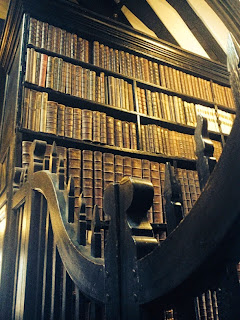
The archive was at Manchester's Chethams library which was outstanding the large bookshelfs and towering stairs with thousands of books. It had tickets and leaflets from the years at belle vue. I found it interesting comparing todays fairgrounds with the historical fairground of Belle vue


MOSI- Victorian fairground

During the lead up to the unit x launch I took a trip to the MOSI museum as it had an exhibition of a working Victorian fair. One of the first things I noticed about the difference between Victorian and modern fun fairs was the use of materials for example the Helta Skelta was made from wood whereas now it is a type of metal as this is a stronger and more durable material. The colours were much richer reds and oranges combined with their complimentary colours of blues and green, this almost made the colours pop and draw the eye towards them.


The idea of looking at the Fairground as something in the past that rekindles feelings and memories of childhood is something I found very interesting. It left questions in my mind; why did the fairground stop?where did it go?. these idea are something I would like to experiment with as I find out about the unit x. launch. I really ;ike the pattern of the Heltaskelta the way it twist around this is something I will look more into in furture weeks.

Wednesday, 19 February 2014

P.E Task 2

For this sampling unit I was given the brief “data roaming”. I played around with the idea of data and finally decided on the theme of “traces”, and how data is compiled through traces left behind from people, objects and processes. I glanced around me and realise the many traces left behind such as stains from the bottom of a cup, scratches on the table top ect. I took some photographs and began to create some inspirational drawings concentrating on shape, line, colour and texture.


I entered the textile world of construct, firstly weave and created a collection of weave samples; I took the colour pallet of neutral creams and beiges from my photographs and artist Anne Goddard.

. “Chester based Ann Goddard combines textile elements with non-traditional textile media such as wood, slate and concrete. She describes her work as a mixture of crafting and conceptualising – working on the margins of textile practice & existing in a border zone between fine art and craft. Themes explore the concept of boundaries and human impact on the landscape.”  (www.textileartist.org ) Her theme links well to mine as she looks at the impact that humans leave on the landscape and so the traces that are left behind. Although Anne isn’t a weaver I found her work very inspirational for my own samples for many reasons including her colour palate which is clearly shown through my sample with the muted creams alongside a darker brown tone as with her piece. The way in which her work is very textural is also something I took forward and introduced into my knit and weave both through using different yarns and fibre as well as experimenting with a variety of techniques. Her use of natural media such as wood alongside manmade materials including concrete was and interesting concept and is shown through my use of combining natural fibres and yarns such as wool and cotton alongside manmade yarns; viscose.


The next thinking step for me was where I envisioned my knit and weaves and the context in which they would be, I started by first ruling out fashion and commercial product and realised that they are much more abstract and textural and so more gallery- based work and so I researched this and came along some artists including Jonathan Brilliant’s “To weave.  To stack. To stain.” This photograph became very influential in my woven samples I looked at the forms he created the “loop” and brought this into my weaves through the technique of floats.  Clear influences are shown through the colour scheme and textural effect.


Another extremely influential artist in my work is Sonya Phillips, she’s a knitter who creates both large and small scale abstract pieces showcased within installations in galleries this is one reason I found her work interesting. I used partial knit to create the small sections of colour change similar to that of Sonya’s, I used a varied thickness of yarns and hooking up to give a tactile surface. This artist influenced may of my final knit samples.


To take my samples further I would experiment with scale and composition to create large textural gallery-based installations as this is where I see me work for an audience interested in traditional crafts used in an abstract form. All of my sample link back to my theme of traces as surely a knit or weave sample is a trace left from yarn, needle or a loom.

Sam. (). Featured artist Ann Goddard – Crafting & conceptualising. Available: http://www.textileartist.org/crafting-and-conceptualising-2/. Last accessed 18th feb 2014.