Showing posts with label Level 6 practice unit. Show all posts

Friday, 5 February 2016

Practice Unit Evaluation

For the practice unit I completed the Bradford brief and produced a body of drawing and sampling to build from in unit X resulting in a finished quilt. Throughout this unit I have improved as a designer and refined my working methods. This can be seen through my development and progression of work from Bradford and into self-initiated and Gawthorpe brief. I have refined my skills in choice of material as a result of this unit. Originally in my Bradford I didn’t take enough care when choosing materials resulting in a vast array including polyester. A number of samples were unsatisfactory due to the choice. However this downfall in Bradford allowed me to fine tune my choice of materials; cottons and silks for my self-initiated body of work and a clear improvement in quality of samples can be seen through this.

I feel that I have challenged and improved my critical and analytical skills throughout this unit as I was able to see my down falls in the Bradford brief for example; time management due to decision making and lack of initial drawing. I used the negatives of the previous unit and challenged
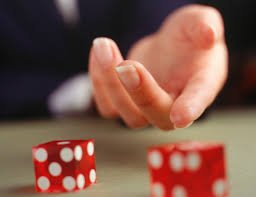
them head on with the inspiration of my self-initiated brief being that of a ‘chance dice’. This method greatly improved my time management. I built a large body of drawing in my self-initiated brief as it was lacking in Bradford as a result my work is now more efficient.
Chance dice
Body of drawing


I used photography, sketchbook, sample ideas and plans book, blog and concept boards to communicate my ideas in a variety of forms that could be easily understood by different audiences. I have become more precise with the context of my work. Bradford was a context led brief; A fashion material. I broke this down and after taking into consideration the delicate nature of my samples I decided that the material would be best for one off garments in runway similarly to that of Iris Van Herpen opposed to high street.

Iris Van Herpen

For my self-initiated and Gawthrope brief the context was more open ended and although My work could be presented in the knitting and stitching show I wanted it to have an ambiguous factor. I took inspiration from HAY and Owen’s Olivia both contemporary design companies for interiors this is where I see my work sitting. As I go into Unit X I want to create a versatile quilt that can be used in a high end interiors context or simply as a piece of art. This ambiguity would not only mean my work could be used in different contexts but also open more opportunities for income as a professional artist.

My own work; Hand paper patched
 using dyed cottons and silks with quilted circles.
Owens Olivia Interiors


I have continued to build on my prospects of professionalism outside and after university. I had a placement at a primary school and set up some opportunities local craft societies. I’ve researched into what types of job opportunities there are in the industry right now. I have sent my CV’s off to high schools for opportunities and will be applying for a secondary PGCE after I complete my degree with a year’s experience.


Overall I am slightly disappointed in my research and development of Bradford but feel I managed to turn it around completely in my self-initiated as can be seen through my initial drawings, refined drawings,artist research folder, context ideas folder, sample plans, choice of material, initial samples and current working samples. The techniques I explored in my self-initiated; paper patches, quilting machine, dyeing, double cloth cut through, were all relevant and helped the progression of my patchwork samples. I am now moving into unit X with a body of work I am proud of and look forward to refining.

Friday, 29 January 2016

Self-initiated and Gawthorpe Brief: Week Eight

I Quilted my finalized working samples on the quilting machine this week, four were machine patched and one was hand patched which was extremely time consuming. When continuing this project through unit X I will make sure that I am booked on the quilter, I have already booked on for the first week as slots are taken up so quickly. I carried my colour scheme through and used a technique of creating cut outs in the materials. This mimicked my drawings and added a focal point to the patches. I used a variety of wadding in these samples including; Thick polyester wadding, Cotton wadding, raised cotton and cotton bump. I felt the raised cotton and cotton wadding worked best as it was a subtle texture change. 


Dyed cotton bump and plain white cotton
dyed cottons


Hand patched dyed cottons ans silks
Dyed raised cotton and cotton poplin

Although the work is being handed in it isn't finished and I will be continuing it through unit X.This week I Sketched up some ideas on how to forward my work for example double quilting and double sided. I also looked into and sampled edge treatments; Mited corner, Bias Binding and Bonded fold, I will incorporate these into my samples as I continue through Unit X where I will create a finished quilt.


Friday, 22 January 2016

Self-initiated and Gawthorpe Brief: Week Seven

I’ve been researching contemporary quilter this week and came across Owen’s Olivia a company which creates geometric style quilts. For context similar to where I see my work; contemporary interiors one offs for a select group of consumers rather than mass produced. Something that I also find interesting is how Owen’s Olivia uses patchwork design to create products similarly to the Bauhaus and HAY. This is where I see my work fitting in the market. My drawings could be translated into quilts for interiors ie chairs, table tops or could be used to create designs for products and sold in higher end high street shops such as Harrods, Selfridges or even stationary shops such as Paperchase.

Owen's Oliva 
Owen's Olivia

 I continued sampling this week to create patches to be sewn on the quilter next week I experimented with composition and when choosing the materials I chose varied weights for example plain cotton with a cotton bump which has a pile. I also washed a sample I had quilted it was interesting to too how the fibers molded together and changed the quilted area. This is something I want to further look into.


Friday, 15 January 2016

Self-initiated and Gawthorpe: Week Six

I booked myself on the quilter before the Christmas break but because of the high demand I only got on for this week. I created some coloured cotton patches. The quilter was quite technical and hard to use however with technical guidance I overcame this. I used the machine to create geometric it was successful as on the bernina free hand quilting it’s almost impossible to create a circle. There are a lot of measurement and maths when using the quilting in terms of plotting out points etc as one inch out could ruin a design. Some testers were successful and others weren’t due to composition and shapes.

Quilted patch turquoise
Quilted patch pink


I created a small hand patched sample this week, It was time consuming but in my opinion worth it. I plan to scale this u and then quilt over on the machine.
Hand patch sample front

Hand paper patched sample back

Friday, 8 January 2016

Self-initiated and Gawthorpe Brief: Week Five

This week I researched traditional quilters; Gee’s bend and Pojagi (Korean quilting) both of these quilters use techniques of patching by hand and using scraps. The long history of quilting for necessity is with both of these movements. There are examples of geometrics in the quilts however because on the most part it is off cuts there are no sharps geometric lines which I want to create so I plan to keep researching and find quilters more relevant to my body of work and context. However looking at these has influenced my material choice and has also made me want to create a hand patched sample

Gee's Bend quilt
Pojagi quilt


I spent the majority of the week dyeing natural materials of cottons and silks to create my colour pallet. As this was my first time in the dye lab so there were issues at first for example patches of colour however due to persistence and learning the correct process I came out with a variety of materials in the colours I wanted. I plan to use these t create geometric forms of patchwork.

Dyed cottons and silks


Sunday, 20 December 2015

Gaining Experience

I have continued to send my CV off to local schools,I have been in touch with a local craft centers and youth centers about any experience I can get. I have set up to help out at my local Salford community center with their fate. There are other university students involved and we will be working as a team to create art stalls with things to see to help raise money for the center. I'm thinking of incorporating quilting somehow. I have been researching into industry jobs


Wednesday, 16 December 2015

Self-initiated Brief: Week Four Introduction of Gawthorpe

This week live briefs were added and I have chosen Gawthorpe; Significance, to create a response to the Gawthorpe archive where if chosen It will be shown in the knitting and stitching show. I chose this because it was an open ended brief and I learnt from Bradford that I work better in this way.

During the archive visit there were a variety of textiles, I was drawn to the quilted and patchworks and in particular a small geometric piece. I plan to merge my own geometric work with the Gawthorpe brief and create a response using patchwork. The brief continues through unit X which is what I wanted to do with my self-initiated so the two work well together.


Friday, 27 November 2015

Self-initiated Brief: Week Three


 This week I continued to build on my body of drawing still using the chance dice and colours. I created varied scale collages in a variety of papers concentrating on colour and composition. I used a crimper to give the collages a changing texture, the lines created mimic that of a quilted surface. This is something I want to look into. The process of spending a few weeks on drawing has definitely been beneficial to me as I now have an abundance of ideas to develop.


My Own Collages
My Own collages

This week I have also been researching artists for inspiration and context. The Bauhaus art movement is an extremely influential movement that passes through many industries and contexts including; Art, Architecture, furniture and design overall. They use geometrics and have a contemporary feel which is something I want my work to have.


Bauhaus
Bauhaus


In terms of context I feel my work is aiming more at high end interiors; one off contemporary pieces. HAY is a high end design company for interiors from tables to kitchenware. This where I see my work fitting. The geometric forms also relate the my own work and that of the Bauhaus movement.
HAY 

Sunday, 22 November 2015

Self-initiated Brief: Week Two

This week I continued with the idea of chance to create my colour pallet. I chose the book 'Print and pattern geometric' and simply flickered onto 9 separate pages at random and chose a colour, I then used gauche to paint the colours out. This was a simple but effective way of choosing a colour pallet as it was restricted to a page however I had the choice of every colour within the page.


Thursday, 19 November 2015

Self-initiated Brief: Week two


I have been inspired by the idea of chance that comes with a dice. However when looking back at the Michael Kidner launch I have been inspired by the Mathematical processes and planning Kidner used within his work. 'The process comes first to the colour'
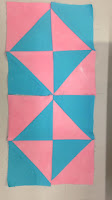
The concept behind this body of work is contrasting processes. The chance dice determines the geometric forms which I will use to create designs. The fact that the process is out of my control is something that is vital to the initial drawing process. However it is not all by chance, there is an underpinning factor of mathematics. Firstly with the dice; there is a set of outcomes for which the dice can be rolled. Secondly within my sketchbook I drew grids to put my designs on (Can be scaled up or down). Also the geometric shapes have a mathematical factor to them. The idea of regiment merging with possibility is something I find interesting and is the concept behind this brief. 


The process of the chance dice has been successful in creating the beginnings of a body of drawing however I feel it is too uniformed within the sketchbook and so I plan to create some bigger drawings using a variety of media including paint, papers, pro-markers, and a variety of pens. I also want to achieve a colour pallet. I am not yet sure what form this work will take in samples but I'm concentrating on experimenting with drawing for now.

Friday, 13 November 2015

Self-initiated Brief: Week one

This week I concentrated on my issue of decision making. I researched into how to become better at this and the different decisions making methods.


When researching I looked into ways of making decisions with no control for example flipping a coin. I came across a novel 'The dice man' written by George Cockcroft, He wrote this book based on his life and how he used a dice to make every decisions through his psychiatry degree.

The Idea of incorporating a dice somehow in my self-initiated brief is something I plan to look into. This would take the control of decision making out of my hands, and thus remove the process which should allow more time to create work instead of time battling with decisions.
In terms of shapes and forms which I plan to incorporate in this project I have been inspired by the geometric style of tattooing. This is a complete opposite to fluent nature of pleating in my previous brief and instead the geometric have Sharpe clean edges, this is something I want to explore.


Thursday, 5 November 2015

Transition From Bradford to Self-initiated Brief

After taking time to contemplate the Bradford brief, and deciding that I no longer want to continue with it I have thought about why it wasn't a successful project for me. Bradford is a context led brief and I have learnt as an artist I don't work best in this way. I felt that it impacted my potential of work because it was too specific and I had preconceptions of a fashion material. I didn't experiment enough within the initial stages of drawing as I was too engaged in the final outcome.
I hold myself back in terms of decision making within my work. I am too conscious of the risks and consequences. This is something I want to challenge in my self-initiated brief as tackling this issue would not only help in terms of the next unit but also in my future professional career. For the live briefs I plan to choose more open ended briefs which don't have a fashion context.

For next week I plan to create some inspiration and possibly a concept for my self-initiated brief, there are a few ideas I have been thinking of in terms of this:
- Something that tackles my issue with decision making
- No specific context
- Influence on a body of drawing/ experimenting
- Sampling

One thing that jumped out during the crit was mt wide range of materials and how some of them were synthetics so one thing I know for my self initiated is that I want to use only natural fibers.

Tuesday, 3 November 2015

Michael Kidner Launch

After the Michael Kidner launch, I felt totally inspired by the enthusiasm that the kidner family had for his work but also for the prospect of what type of work the students could come up with.

The statement that totally grabbed my attention was; “Structure comes first to the colour.”
 I feel that the Kidner live brief could work well as it relates to my ongoing practice which is currently focussing on pleating and fabric manipulation.

Kidner’s “wave” collection really made me think about pleating and giving me the idea of creating a more three dimensional effect with the pleats. And the different context of the shift from fashion to gallery is something i find quite inspiring in terms of where my work fits and it audience


Kidner's work in the gallery

Michael kidner wave collection


For the next week I plan to experiment with different types of materials to see how they react to the pleats for example; Wool, Paper nylon. I want to see how the qualities for example the stiffness and weight of the material impact on the pleats and also to see how natural and synthetic materials react.

Saturday, 31 October 2015

Bradfrd Brief: Week 4 Presentation

This week I held my presentation for the Bradford live brief. Doing this with my peers allowed me to compare and contrast between our work. I made myself a sheet of bullet points and ran through the presentation to make sure I could fit it in the allotted time slot doing this prepared me and allowed me to have a more professional manner within the crit. It was quite easy to see from my peers who had prepared well and who hadn't. This presentation also gave me an idea of what to expect for the next one, 

Our presentation skills is a criteria for the practice mark scheme. I know for the next one I shall create a powerpoint to give a more professional edge.

Other than nerves I feel that the presentation went well. The presentation helped me think how to further my work, however I don't feel that I want to continue with this body of work. My piece which I preferred to use as my final sample I didn’t feel had enough going for it because it was just pleating and embellisher so I made a sample with cornelli and other techniques. In the crit it was talked about how my strongest sample was in fact the pleated embellished one and I should have had the confidence in my work to know that instead of having preconceptions on what I thought the tutors and Bradford wanted.

Pleated and embelished sample

Friday, 30 October 2015

Bradford Brief: Week 4

Throughout the weeks I have sampled and ended with a small collection of beige and brown samples and a large collection of tones of white pleated samples. I feel there has been successes and downfalls within both collections. I have incorporated techniques such as:

-Pleating (made a pleating card)
-Cornelli manchine stitch
-Hand stitch
-Embellisher
-fabric manipulation
-Trapping
-Heat press printing

Beige/Brown collection:


There has been success and downfalls within both collections firstly I don’t feel that the colour scheme was quite right with the collections as adding the blue to beige and blue to white was too harsh when in fact looking at my inspirations I wanted to create a more subtle colour change. I also feel that I struggled with the idea that simplicity is best. In some samples I have used too many techniques because I thought that’s what I should do instead of trusting my gut and artistic eye. However there has been successes, I have gained a greater knowledge on pleating and some samples were simple but effective. 

White collection:


In terms of context I was looked over my artists and designers and I’m drawn back to Iris Van Herpen. Below is a close up photograph of one of the designs, the idea of the pleating being the shoulder of the garment is something interesting as it stands as a focal point for a statement piece. The chosen materials of my samples and the pleats are quite delicate and fragile as a result of this I feel the fit more as a collection of one off pieces to be in boutiques or runway instead of being mass produced on the high street.  

Iris Van Herpen